
Christmas and the English Civil War
In the years leading up to the English Civil War, Christmas was still legal and commonly celebrated across England and Scotland. Attitudes varied sharply between households, however, largely reflecting the political and religious tensions that were bubbling to the surface of society.
Prior to the war, Christmas was characterised by religious observance, followed by feasts, with rich food, plenty of drinks, and evenings of games, or even ‘masques’ – dramatic performances, often performed at court or in wealthy households, that consisted of dancing, dialogue, pantomime and song. The performers usually wore masks that were removed at the end of the production.
The Twelve Days of Christmas
In the early 1600s, Christmas was more than just a single day. Citizens traditionally celebrated the twelve days of Christmas, and festivities took place daily between the 25th December and 6th January.
Not all twelve days were treated similarly, though. The Main Feast Days occurred on Christmas Day, New Year’s Day, and on Twelfth Night (6th January), while the remaining nine days were for informal gatherings.
Main Feast Days
- Following a morning church service, these occasions were usually centred around dinner, the principal meal of the day, which in the 1640s was served midday to early afternoon (typically between 11 a.m. and 2 p.m.).
- Guests would arrive in the late morning, dine for several hours, and sometimes stay into the evening for games, music, or masques.
Informal Gatherings
- Friends or kin might be invited in the late afternoon for a “banquet” (in the 17th century, this meant a sweet course served in a separate room).
- A supper party was also possible, but “supper” was lighter than dinner and eaten later (around 6–8 p.m.). This was often reserved for more intimate or fashionable gatherings, rather than the big festive feasts.
Christmas was about to Change
Criticism of the way Christmas was celebrated had been building since the mid 1500s, and by the early 1640s, there were clear differences of opinion based on differing religious and political affiliations. Many shunned the traditional Christmas enjoyed by those who supported the King.
The more serious-minded, Parliament-supporting merchants, for example, may have been wary of the excesses of Christmas, and suspicious of “popish” or courtly display. They were not so strict as to want to banish Christmas entirely (that was something restricted to the sterner Puritans). Instead, the households of Parliament-supporting merchants, would temper festivity with sobriety, keeping the day honourable and godly but still warm, sociable, and marked with good cheer.
How Christmas might have been observed in three types of London households in December 1640.
For the purposes of this summary, the Christmas of 1640 focusses on three groups of interest:
Royalists: Those who supported the King, and who continued to favour the traditional celebrations.
Moderate Parliamentarians: These were men who sided with Parliament in its struggles with the King. They were concerned by the changes the King and his Archbishop of Canterbury, William Laud, were trying to force onto churches across both England and Scotland. Most particularly, they believed the King was trying to realign the Church of England with the Catholic Church in Rome, something they vehemently opposed.
Puritans: The rise of Puritanism had been ongoing for decades, but by the 1640s it had begun to reshape public policy. Many Puritans refused to observe Christmas, arguing that it had no scriptural authority and was burdened with “superstition” and Catholic ceremony. They condemned its feasting, games, and idle revelry as ungodly.
Christmas Day
Below is an example of how Christmas Day may have played out across the different London households:
- Royalist Household (pro-King, pro-Laudian church practices)
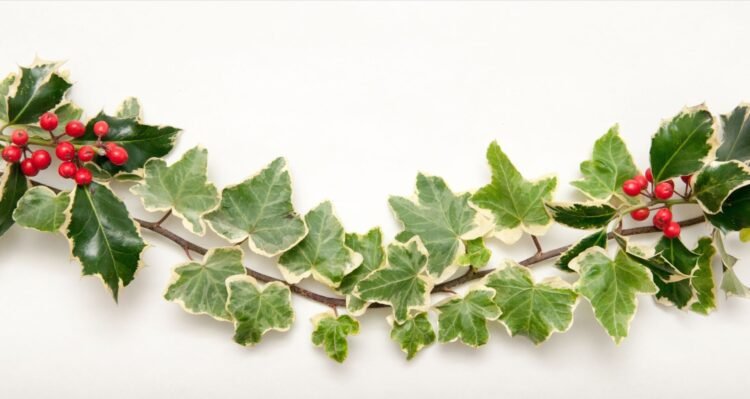
In these households, the tone on Christmas Day would be warm, festive, traditional, and ceremonially Anglican. The house would be decorated with holly, ivy, bay, and possibly mistletoe.
A large fire would burn in the main hall or great chamber, and musicians might be hired such as a viol consort, or lute and singers.
Christmas Day Morning
- The entire household would attend a full Christmas Day service at a Laudian-leaning parish (e.g., St Martin-in-the-Fields or St Clement Danes).
- The household would walk together with liveried servants accompanying them.
- They would take Holy Communion, which would be elaborately celebrated with candles, rich vestments, and choral music.
Christmas Dinner
After the Church service, the Christmas Dinner would be served between midday and early afternoon. This might include:
- A boar’s head or venison pasty as a centrepiece (status symbol).
- Roast beef, mutton, or goose.
- Spiced baked dishes, mince pies (still containing meat), and plum porridge.
- Sweet dishes with imported sugar, marchpane, comfits.
- Wine would flow freely, such as claret, sack, malmsey, and possibly hippocras (spiced wine).
- Strong beer and ale would be available for servants and younger members.
Christmas Evening
Games of cards, dice, storytelling, music, &/or dancing may take place. Gifts may be exchanged among family members and guests may join them.
Gentlemen could also retire to a withdrawing room to smoke tobacco in pipes.
- Moderate Parliamentarian Household (supports Parliament but not Puritan)
The tone here would be respectable, modest, and still festive while avoiding “popish excess.” The house would be decorated with some greenery such as holly, ivy and bay, as they were considered a harmless custom.
There would be no revelry or dancing; but there would be warmth, family, and hospitality.
Christmas Day Morning
- The whole family would attend church, but it would be a plain service with fewer ceremonial elements and no extra candles or special music.
- The sermon would emphasise Christ’s nativity, family duty, and charity.
Christmas Dinner:
The Christmas dinner would be less extravagant than in the royalist household but would still be considered special. It might include:
- Roast beef or goose; perhaps a venison pie if the merchants were wealthy.
- Plum pudding/porridge and mince pies. These were still considered seasonal, rather than religious.
- Spices were used but less extravagantly.
- Wine would be served, but not excessively. Usually claret or sack with dinner.
- Good ale and small beer would also be available.
Christmas Evening
There would be quiet games: possibly chess, or backgammon. Guests might read out loud, perhaps verses from scripture, sermons, or moral tales.
If singing took place, it would be of metrical psalms rather than carols.
- Puritan Household (strongly anti-Laudian)
The tone here would be sober, restrained, and devout. Puritans did not yet fully reject Christmas (that came later), but they treated it as an ordinary day or a quiet day of worship.
There would be no decorations as greenery such as mistletoe or holly were considered pagan/popish.
There would also be no music, dancing, or games. Instead, the day might be used for prayer, Scripture reading, and reflection.
Christmas Day Morning
Many Puritans would still attend church, but they would reject any special liturgical ceremony. Some ministers preached against keeping the day special as they believed it was burdened with superstition.
Some Puritan families would attend no service at all and treat it like any other day.
Christmas Dinner:
A decent meal would be served, but it would not be elaborate or indulgent:
- Roast beef, mutton, or rabbit; simple pottage.
- No mince pies — they were associated with Catholic symbolism.
- No plum porridge, marchpane, or festive spiced dishes.
- Ale or small beer in moderation; wine avoided except medicinally.
Christmas Evening
There would be quiet reading and psalm-singing. There would be no gift-giving (it was considered frivolous) and children would be expected to behave soberly.
Twelfth Night
Twelfth night marked the end of the Christmas season and focussed less on the religious aspect of Christmas and more on the frivolity (except for Puritan households)
The celebrations followed a similar distinction between the households, with royalists having the most elaborate gatherings, while Puritans would largely shun all festivities. Merchants would fall somewhere in the middle.
The example below outlines how royalists may have planned a Twelfth Night feast in 1640:
Morning Church Service
This would be the first event of the day. Family and invited kin would attend worship as Twelfth Night marked the Epiphany, so it had religious weight.
After the service, they would return home to finalise the preparations for the day.
The Main Event – Midday Feast
Guests such as neighbours, business associates, and kin would arrive in the late morning. Warm spiced ale or sack would be offered at the hall fire.
Dinner would be served in the great dining chamber around midday. It would typically be a lavish meal in two courses. Once finished (in early afternoon), grace would be said, and the gentlefolk would withdraw to a withdrawing room or gallery, while the servants cleared away.
Afternoon Entertainments
The afternoon would be filled with games & merriment, such as cards, dice, or shovelboard. There would be singing of catches and rounds. Children might act out a brief “mumming” (wearing theatrical masks to perform folk plays or visiting neighbours, often silently) or be allowed sugared almonds as treats.
At around 4pm, the Twelfth Cake would be brought out. This was a rich fruit cake with a bean and a pea baked inside. Whoever received the bean is “King,” and the pea “Queen,” for the night. Paper crowns may be donned, even in sober households.
Evening Revels
Early evening would see dancing & disguising. In more Royalist-leaning homes, there might be masks, music, and country dances by candlelight. Merchants often hired a fiddler or lutenist.
After a couple of hours of merriment, a light supper would be served to include things such as cold meats, cheese, stewed fruits, bread, and ale. It was less formal than dinner.
Finally, after the savoury supper, a late-night banquet would be served, often in a smaller chamber. This would consist of sweetmeats such as marchpane, preserved quinces, dried figs, comfits, sugarplums, marmalade of oranges.
Spiced hippocras wine and a little aqua vita (distilled spirit) would be served for good health.
By 10:00–11:00 p.m. in the evening, the guests would be ready to depart into the frosty night. The season’s feasting would be over for another year and from the next morning, ordinary business resumes.
The Banning of Christmas
The banning of Christmas is one of the events of the English Civil War that is known, even by those with little or no knowledge of the rest of the time period. What may or may not be known is that this was a gradual process that took nearly one hundred years to come to fruition.
1560-1590
The criticism of Christmas started in the late 1500s (1560s–1590s) when Puritans began objecting to “superstitious” feast days, the decoration of churches, Christmas revelry and the morality of dancing, plays, and gambling.
At the time, they had little political power and so these criticisms circulated mainly in sermons and pamphlets of specific congregations. They had little impact outside Puritan circles.
1600-1610
By the early 1600s, Puritan influence was on the rise, which lead to early conflicts across religious denominations. Puritans increasingly resisted Christmas church services, as well as other year-round activities such as games and mumming, fairs and wakes, and Easter communion, as a required practice
Under King James I (of England), Puritans were becoming more vocal, but the Crown suppressed them. The impact of their influence was localised and patchy although some godly ministers reduced the number of Christmas services or discourage festivities.
1620-1630
In 1625, with the death of King James, and the succession of his son, Charles I, there was growing tension between the Puritans and the established church.
King Charles firmly believed in the unity of the church across both England and Scotland, and with the aid of William Laud, the Archbishop of Canterbury he tried to push through a number of controversial changes.
These changes, dubbed Laudian Innovations, sought to emphasise Church ceremonies and festivals, install altar rails in churches and introduce a new Book of Common Prayer. Many Puritan towns and parishes objected to these innovations, and some town councils tried to restrict revels (notably in Suffolk, Essex, and East Anglia).
At Christmas time, Puritan ministers preached against Christmas feasting, plum porridge, and mince pies, while other parishes quietly stopped decorating churches at Christmas.
By now, the impact of these protests was becoming noticeable, and it was clear that a cultural divide was emerging.
1640-1642
By 1640–1642, the Puritan Influence had become a national movement and had begun to reshape public policy.
A key driver was the Long Parliament of 1640 (named in contrast to the Short Parliament of 1640, which the King dissolved three weeks after it was convened).
During the Long Parliament, the House of Commons (the elected chamber of Parliament) was dominated by anti-Laudian and Puritan sympathizers.
Bishops, who sat in the non-elected House of Lord, were impeached and Laudian ceremonies were attacked.
By 1641, many churches had also stopped using decorations and special Christmas readings.
The impact of these changes was noticeable, and many London parishes altered Christmas worship even before the war had begun.
1643-1647
Once war had been declared in August 1642, Holy Days were actively suppressed across the country. This was a critical period during the war and the years that followed.
In 1644, Christmas was declared a fast day, thereby putting an end to the feasting and revelry of the royalists and moderate Parliamentarians.
By 1645, the Directory for Worship had abolished Christmas and Easter as holy days.
1647 and Beyond
In 1647, following the death of the King, Parliament formally banned Christmas, Easter, and even Whitsun.
The rulings affected all parts of the country and were legally enforced.
Following this, Christmas was suppressed throughout the years of the Commonwealth and Oliver Cromwell’s time as Lord Protector. It was only resumed following the Restoration of King Charles II in 1660.